

Six years later: How VIDO helped respond to the COVID-19 pandemic
VIDO reflects on its response to the COVID-19 pandemic and how that work continues to shape Canada’s preparedness for future health threats.
By Candace LambSix years later, that work still matters. It strengthened Canada’s research capacity, deepened global partnerships, and reinforced why domestic high-containment research and vaccine development expertise are essential.
Immediate action that made a difference
On January 10, 2020, days after the genetic sequence of the novel coronavirus later referred to as SARS-CoV-2 was released, VIDO began designing a vaccine candidate.
VIDO was part of the global response from the beginning, with its scientists invited to contribute their expertise at the first WHO expert consultation.
A month later, scientists at VIDO had isolated SARS-CoV-2. In practical terms, they grew the virus from a patient nasal swab so it could be studied safely in the lab. Those samples were shared with other laboratories across Canada and internationally so researchers could begin their own work to find potential vaccines and medicines, including diagnostic development and virus characterization.
Animal models were developed at the same time. Vaccine design and testing moved forward together so promising candidates could be evaluated without delay.
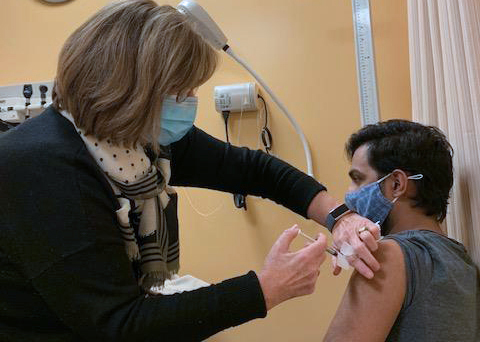
Later that year, VIDO became the first university in Canada to advance a COVID-19 ‘subunit’ vaccine candidate into human clinical trials. Health Canada authorized a Phase 1 trial in December 2020, and the first volunteers were vaccinated in February 2021.
This early action positioned Canada to contribute to the global response at a critical moment.
A national resource thrives under pressure
When the university campus closed in March 2020, VIDO’s high-containment facilities remained open. Eighteen animal rooms and six Containment Level 3 (CL3) laboratories were dedicated to COVID-19 research.Across 2020 and 2021, VIDO conducted more than 100 animal trials and over 50 in vitro studies and early laboratory tests that help determine whether a vaccine or treatment is likely to work before it is tested in people. More than 200 companies and organizations relied on VIDO’s expertise, and over 500 vaccines and therapeutics were evaluated using models developed in Saskatoon.
Laboratories were reconfigured, staff were reassigned, and new team members were trained one-on-one before being approved to work in containment. The experience built lasting expertise.
“When COVID-19 emerged, VIDO quickly redirected its research and resources to support the global response,” said Volker Gerdts, director and CEO of VIDO. “Within weeks, our scientists developed the assays and animal models needed to study the virus and test new vaccines and medicines. At the same time, we worked with partners from around the world while advancing our own vaccine candidate into human clinical trials. Each of these efforts alone would have been a major undertaking, but accomplishing them together highlights the depth of expertise and capability at VIDO.”
Supporting Saskatchewan, Canada, and the world
VIDO’s role extended beyond vaccine development.When personal protective equipment was in short supply, VIDO partnered with the Saskatchewan Health Authority to sterilize N95 masks using vaporized hydrogen peroxide. By July 2020, more than 8,000 masks had been safely decontaminated and returned for frontline health-care workers to use as an emergency backup supply. Many more would follow.
Researchers and leaders also spoke regularly with media to explain the science aspects of the pandemic, during a time of uncertainty and misinformation.
Meanwhile, VIDO strengthened national and international collaborations, contributing three times a week to WHO discussions, joining global research networks, and securing partnerships that continue to support pandemic preparedness today.
From prototype vaccine to national capacity
Although other vaccines were ultimately used in Canada’s rollout, VIDO’s COVID-19 vaccine program marked an important milestone. It was the first time the organization led the advancement of an internal vaccine candidate into human trials. This vaccine technology is currently being built upon to develop a broadly protective coronavirus vaccine, supported by funding from the Coalition for Epidemic Preparedness Innovations (CEPI).These successes demonstrated the organization’s potential and accelerated investment in domestic infrastructure. Federal, provincial, municipal, and donor funding supported expansion of containment operations and construction of VIDO’s Vaccine Development Centre – a CL3-capable, Good Manufacturing Practices (GMP) -compliant, biologics manufacturing facility.
Today, VIDO can move from discovery through preclinical testing and into manufacturing. The pandemic underscored how important it is to have that capability available in Canada.
Lessons that strengthened preparedness
COVID-19 exposed vulnerabilities in global supply chains, from protective equipment to specialized manufacturing materials. VIDO experienced those challenges firsthand.
In response, the organization grew its trained workforce, expanded biosafety practices, built new manufacturing capabilities, and deepened partnerships across Canada and internationally.
More scientists and technicians are now trained to work safely in high-containment environments. Many trainees remain in Canada, contributing to long-term national expertise.
Six years later, VIDO’s COVID-19 response is more than a record of what happened. It shows what sustained investment in high-containment research and domestic vaccine development can deliver when it matters most.
As new infectious diseases continue to emerge, the capacity strengthened during COVID-19 helps ensure Canada is better prepared for what comes next.
View the full COVID-19 timeline.
Impact at a glance
- First university in Canada to advance a COVID-19 vaccine into human trials
- 100+ animal trials and 50+ in vitro studies completed
- 200+ companies supported globally
- 500+ vaccines and therapeutics evaluated