

VIDO research studies how avian influenza may interact with pigs
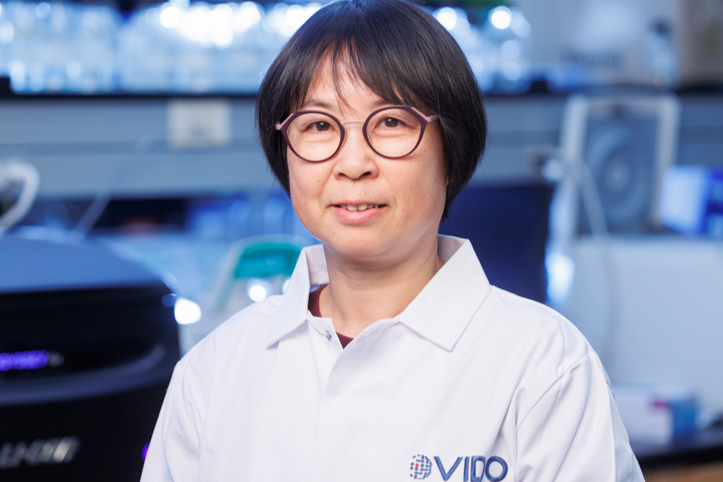
Dr. Yan Zhou’s team is studying how highly pathogenic avian influenza, known as HPAI, may interact with pigs.
By Caitlin GillDr. Yan Zhou’s team is studying how highly pathogenic avian influenza, known as HPAI, may interact with pigs.
HPAI is a serious form of avian influenza that can cause severe disease in birds. H5N1 is one subtype of HPAI, and it has drawn attention because it has been detected in a growing range of animals, including dairy cattle for the first time ever in March of 2024 and pigs in October of 2024. That changing host range has raised questions about how the virus moves between species and what tissues it may be able to infect.
Pigs are important to influenza research because they can play a role in how influenza A viruses, such as H5N1, adapt. Influenza A viruses are a large group of flu viruses that can infect birds, pigs, people and other animals. Pigs are sometimes described as “mixing vessels” because they can be infected by influenza viruses from different species. When that happens, viruses may exchange genetic material, which can contribute to the emergence of new strains.
Dr. Zhou’s team is looking at a question that has not been well studied: whether the porcine mammary gland could support infection by H5N1. The mammary gland is the tissue that produces milk. Researchers became interested in this question after H5N1 was found to infect the mammary glands of dairy cattle, showing that the virus could appear in a tissue not traditionally associated with influenza infection.
“Influenza viruses continue to surprise us by showing up in new hosts and tissues,” said Dr. Zhou. “By studying how these viruses interact with various cells from swine, we can better understand potential risks and strengthen preparedness before a problem emerges.”
The team studied influenza virus receptors in swine mammary gland and respiratory tract tissues. Receptors are structures on cells that viruses use to attach and enter susceptible cells. The researchers also examined how different influenza A viruses, including viruses from birds, cattle, pigs and humans, interacted with swine cells.
Their findings suggest that the porcine mammary gland has features that could allow some influenza A viruses to bind and replicate. Replication means the virus is making copies of itself inside cells. The study found that bovine H5N1 virus replicated efficiently in both porcine mammary gland cells and respiratory tract cells, while other influenza viruses showed different levels of growth depending on the cell type.
This does not mean pigs are currently spreading H5N1 through mammary tissue. Instead, the research points to a possible site of infection that deserves closer attention. Understanding where influenza viruses can replicate helps scientists assess risk, improve surveillance and prepare for future changes in the virus.
For VIDO, this work supports a One Health approach, which recognizes that the health of people, animals and the environment are connected. Influenza viruses can move across species boundaries, and studying those interactions helps researchers better understand how emerging infectious diseases may evolve.
The research also supports pandemic preparedness. By identifying and understanding how influenza viruses grow in different species, VIDO scientists are helping build knowledge that could inform future animal health monitoring, risk assessment and response planning.