

VIDO targets African swine fever with vaccine and antiviral research
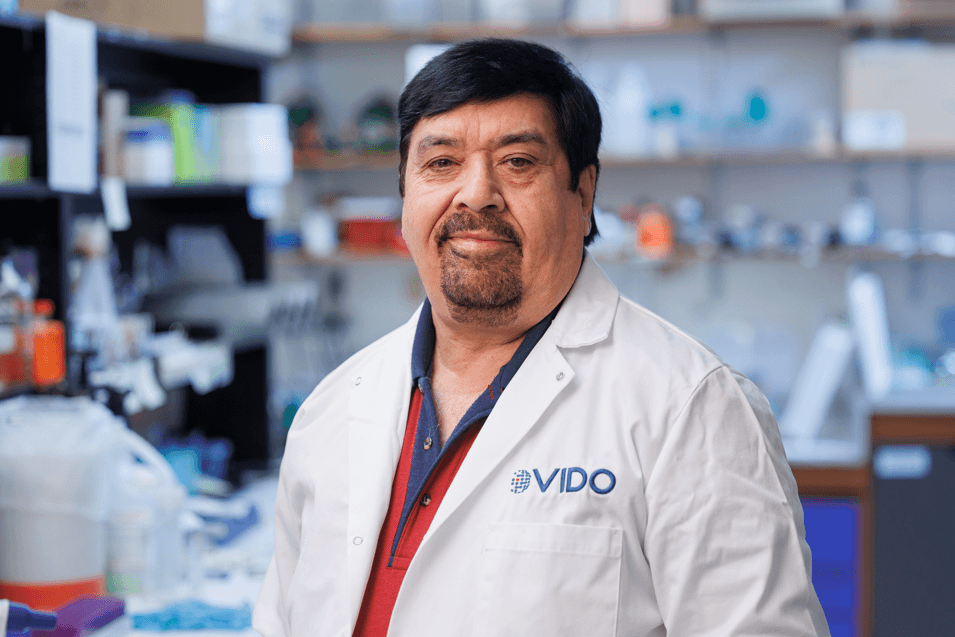
Dr. Sureesh Tikoo and his team are studying African swine fever (ASF), also known as “Ebola of pigs”, to help Canada prepare for a major animal health threat before it arrives.
By Caitlin GillDr. Sureesh Tikoo and his team are studying African swine fever (ASF), also known as “Ebola of pigs”, to help Canada prepare for a major animal health threat before it arrives.
ASF is a highly contagious viral disease of domestic and wild pigs. It can cause death rates of up to 98% in infected animals. There is no widely available treatment or vaccine suitable for routine use in ASF-free countries such as Canada.
ASF has not been detected in Canada, but it poses a serious risk to pig health and the pork industry. An outbreak of ASF in China just before the pandemic decimated their swine industry and produced significant food shortages. Once introduced, presence of tick reservoirs and feral pigs may help in quick spread of ASF virus thus creating a catastrophic problem for Canada. Canada ranks fourth in the world for pork exports, so a positive case would have a significant impact to our livestock industry and international market access. An outbreak of ASF in Canada is projected to cost the swine industry more than $3.6 billion.
“African swine fever is not in Canada, and that is exactly why preparedness matters,” said Dr. Tikoo. “Our work is focused on studying virus-host interaction with the aim of developing tools that could help in early detection/protection against ASF, support producers and strengthen Canada’s response if this disease ever appears here.”
VIDO is the first non-government research organization in Canada approved to conduct both laboratory and animal work with ASF. This work takes place with enhanced oversight and strict safety systems.
Dr. Tikoo’s team is developing a diagnostic test for early detection of ASF and a vaccine that does not use infectious ASF virus. Instead, the team is studying non-pathogenic viral vectors for vaccine delivery. A viral vector is a delivery tool that carries selected genetic material into the body to help train the immune system. In this case, the vector is adenovirus and the approach is designed to help pigs recognize parts of ASF without being exposed to the ASF virus.
The team is also identifying antiviral compounds that could help stop the virus from multiplying in pigs. Antivirals are treatments designed to slow or block virus replication in the host.
VIDO researchers are developing additional tools, including a swine model to assess the effectiveness of vaccines, antivirals and other treatments for pigs.
This research supports Canada’s preparedness in agriculture. By building knowledge and tools before ASF reaches Canada, VIDO is helping strengthen the country’s ability to respond quickly to a disease that would have major consequences for producers and food security in Canada and internationally.