

VIDO vaccine research targets PEDV and porcine deltacoronavirus
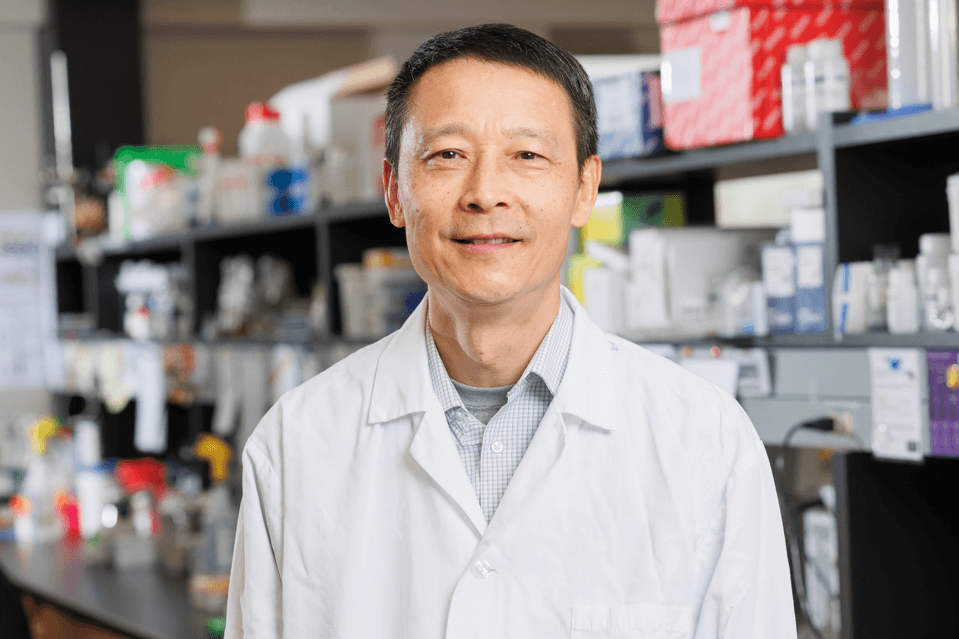
Principal Scientist Dr. Qiang Liu and his team are developing new vaccine strategies to help protect pigs from viruses that can cause serious losses in swine herds.
By Caitlin GillPrincipal Scientist Dr. Qiang Liu and his team are developing new vaccine strategies to help protect pigs from viruses that can cause serious losses in swine herds.
The work includes two related projects. One focuses on developing multivalent vaccines for porcine epidemic diarrhea virus, known as PEDV. Multivalent vaccines are designed to protect against more than one strain or form of a pathogen. The other project is focused on a bivalent vaccine against PEDV and porcine deltacoronavirus, known as PDCoV.
PEDV and PDCoV can both cause diarrhea, dehydration and illness in pigs. PEDV is especially dangerous for newborn piglets and can lead to very high death rates. It can also affect sow performance, creating additional challenges for producers.
“PEDV and PDCoV can be extremely difficult for producers to manage because they spread quickly and can have serious consequences for piglets,” said Dr. Liu. “Our goal is to develop a vaccine to protect animal health, reduce losses and support a more resilient pork sector.”
Some of VIDO’s previous work looked at mechanisms to improve biosecurity including cleaning, disinfection and careful movement of animals, people and equipment can help reduce disease spread. But biosecurity alone has not eliminated the risk, and producers recognize the impact on their industry.
In one project, Liu’s team is working to improve protection against PEDV by modifying an existing ‘inactivated’ PEDV vaccine. An inactivated vaccine uses killed pathogen as its base - it cannot cause disease. The team is also studying whether adding specific vaccine components, referred to as adjuvants, can improve the immune response in pigs.
In the second project, the team is developing a bivalent vaccine. Bivalent means the vaccine is designed to protect against two targets. In this case, the goal is to help protect pigs against both PEDV and PDCoV.
That project uses a subunit vaccine approach. A subunit vaccine uses non-infectious ‘pieces’ of the pathogen rather than the whole virus. These pieces help train the immune system to recognize a threat without exposing animals to the disease-causing virus.
Both projects are still in the early development stage. The goal of the work is to identify a vaccine that is safe, practical and able to protect the pigs against disease. A key goal is to understand whether vaccinating sows can help protect piglets early in life, when they are most vulnerable.
This work builds on Dr. Liu’s previous PEDV vaccine research, which focused on vaccinating sows to pass protective antibodies to piglets through colostrum and milk. Antibodies are proteins made by the immune system that help recognize and fight infection. Colostrum is very antibody rich.
Better protection could have wide-reaching benefits. Healthier pigs support animal welfare, reduce stress for producers and barn workers, and help strengthen the pork sector. Preventing disease can also support environmental sustainability, because healthier animals use feed and energy more efficiently.
For VIDO, the work reflects its broader goal of protecting animal health, supporting food security and help Canadian sovereignty by preparing for infectious disease challenges that affect our agriculture. By developing better vaccine tools for swine diseases, VIDO researchers are helping build practical solutions for producers and the animals in their care.