

Working towards better protection against PRRSV
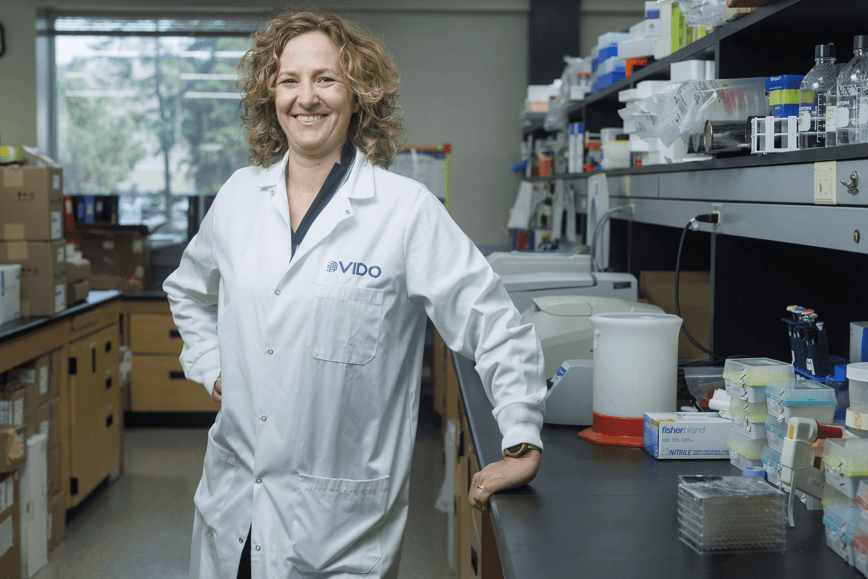
Dr. Heather Wilson’s team is working to develop stronger vaccine protection against porcine reproductive and respiratory syndrome virus, known more commonly as PRRSV.
By Caitlin GillDr. Heather Wilson’s team is working to develop stronger vaccine protection against porcine reproductive and respiratory syndrome virus, known more commonly as PRRSV.
PRRSV is a major disease of pigs. It can cause reproductive problems in sows, including abortions and weak piglets. It can also cause respiratory disease in weaned and growing pigs.
For producers, PRRSV is one of the most costly and difficult swine diseases to manage. According to Animal Health Canada, its estimated annual cost for Canadian producers is approximately $184 million. One of the biggest challenges is that the virus has many different strains. Current vaccines do not provide complete protection against that wide range of strains, and producers need more effective options.
“PRRSV is difficult because producers are dealing with a virus that has many different strains,” said Dr. Wilson. “Our goal is to develop stronger and broader vaccine protection that can make a meaningful difference for pig health and for the people raising them.”
VIDO’s research is focused on developing a vaccine that creates strong immunity and broader protection. Broader protection means a vaccine could help protect against more than one strain of the virus.
This work is still in the research stage, but the goal is clear: give producers better tools to protect pigs from a disease that affects animal health, productivity and farm stability.
PRRSV research also connects to VIDO’s broader mission of protecting healthy animals and supporting food security. Diseases that affect reproduction and growth can have impacts across the whole production system, from animal welfare to producer costs.
By studying how to improve vaccine protection, Dr. Wilson’s team is helping address one of the most persistent infectious disease challenges in swine health.