


Faster vaccines, smarter research: How VIDO is putting advanced computing to work
Artificial intelligence (AI), supercomputers and advanced modelling are changing what’s possible in infectious disease research and vaccine development.
By Candace LambThe Vaccine and Infectious Disease Organization (VIDO) at the University of Saskatchewan (USask) has researchers putting these tools to work alongside laboratory research to help understand pathogens, predict immune responses and identify promising vaccines and treatments faster. By exploring and narrowing possibilities computationally before moving into the lab, researchers can focus experiments on the strongest candidates, potentially reducing development time, costs and the number of animals needed in research.
Computing work is part of VIDO’s integrated, end-to-end approach to infectious disease research, bringing computational expertise together with multidisciplinary lab scientists, high-containment laboratories, preclinical animal studies, vaccine development and manufacturing capabilities in one place. This combination of expertise and world-class research infrastructure helps move promising discoveries more efficiently from research through testing and development, supporting the rapid development of Canadian-made solutions to emerging infectious disease threats. This contributes to important global initiatives such as CEPI’s 100 Days Mission, which aims to make safe, effective vaccines available within 100 days of identifying a pandemic threat.
Three ways VIDO is using computing for infectious disease research
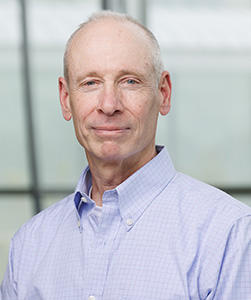
Gordon Broderick: Modelling how the immune system behaves
Dr. Gordon Broderick uses mathematics and computing to build virtual models of how the immune system works.
His team translates existing knowledge about immune cells and how they interact into computer models that can predict how the immune system might respond to an infection or vaccine before those ideas are tested in the lab.
The team is now expanding from individual cells to virtual populations of interacting cells, with the longer-term goal of modelling more complex immune structures such as lymph nodes and mucosal tissues.
One way this could help is in vaccine development. Broderick’s team is using computing to explore which combinations of vaccine ingredients may make a better vaccine. This includes antigens, which teach the immune system what to recognize, and adjuvants, which help strengthen the immune response. By considering both from the start, researchers hope to identify promising vaccine formulations earlier and prioritize the strongest options for laboratory testing.
Broderick’s team is also working closely with Dr. Steven Rayan and USask’s Centre for Quantum Topology and Its Applications (quanTA) to explore how high-performance and emerging computing technologies could further accelerate vaccine research. The partnership brings together VIDO’s expertise in infectious disease and vaccine development with quanTA’s expertise in advanced computing, including quantum computing.
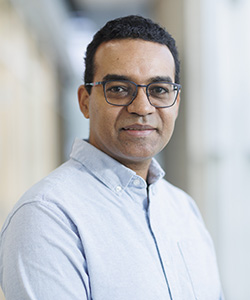
Mohamed Helmy: Turning biological data into insights
Modern infectious disease experiments can generate enormous amounts of data about what is happening inside cells during an infection. Dr. Mohamed Helmy develops computational approaches to turn that data into useful information.
His team analyzes complex biological datasets to identify patterns that can help researchers understand what happens during an infection or immune response, from how a pathogen affects a cell to where a potential vaccine or treatment could make a difference.
Increasingly, that work includes AI. In recent research, Helmy’s team tested how well AI could predict changes in viral proteins. The results demonstrated both its potential and its limitations, reinforcing why computational predictions still need to be tested against real biology.

Zahed Khatooni: Screening possibilities before they reach the lab
Dr. Zahed Khatooni takes research down to the molecular and atomic level, using powerful computers to study proteins and other molecules and predict how they might interact.
His team virtually screens large numbers of epitopes, small parts of proteins that can be recognized by the immune system, to identify potential vaccine candidates. They also design and virtually screen potential antimicrobial and therapeutic compounds, narrowing the possibilities before laboratory testing begins. This helps lab researchers focus their time and resources on the options that appear most promising.
In one recent study, researchers looked for potential vaccine targets for Hantavirus that causes disease in humans. Computational approaches helped narrow many possibilities among several proteins from different families to promising components for a potential vaccine.
Khatooni’s team is also using computational approaches to develop antiviral compounds and therapeutic peptides, short chains of amino acids that can potentially be used to fight disease. The team can screen libraries containing up to a million chemical compounds to identify promising candidates for laboratory testing.
Connecting computer predictions with lab research
Computational tools can help researchers narrow possibilities and make predictions, but those predictions still need to be tested.
At VIDO, computational scientists work directly with lab scientists studying pathogens, immune responses, vaccines and medical countermeasures. Promising ideas can move into laboratory testing, with experimental results feeding back into better models and predictions.
That cycle of prediction, testing and refinement can help researchers focus on the options most likely to succeed and move promising discoveries to real-world applications faster.
Building computing capacity for the next generation of research
VIDO’s access to advanced computing is continuing to grow. USask is installing Canada’s first university-owned and operated, vendor-supported, full-stack, open-architecture quantum computer, with medical countermeasure discovery as a key applications. VIDO was one of several partners that contributed to bringing a quantum computer to USask, recognizing it as an important asset to have in Canada’s research infrastructure.
Quantum computers work differently from traditional computers and may eventually help researchers tackle highly complex problems more efficiently.
For VIDO, the technology adds to Canada's growing domestic capacity in two areas increasingly important to national security: advanced computing and medical countermeasures. It could become another tool to help accelerate infectious disease research while strengthening Saskatchewan’s world-class research ecosystem and building the expertise, infrastructure and technologies Canada needs to respond to future threats.