

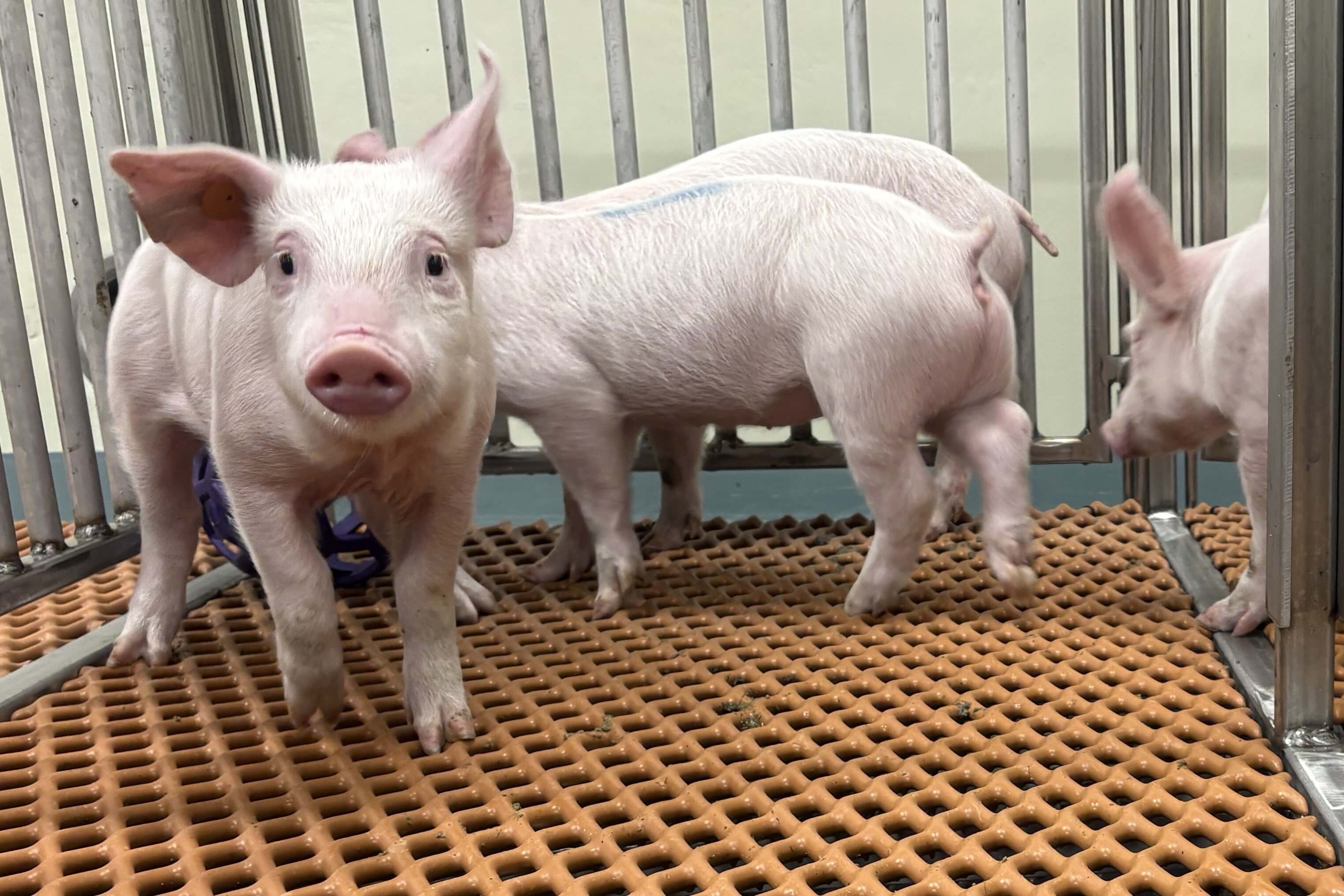
Inside VIDO’s swine research to help protect pigs, producers and food security
Scientists at the Vaccine and Infectious Disease Organization (VIDO) at the University of Saskatchewan (USask) are researching solutions to infectious diseases that affect pigs, pork producers and the broader food system.
By Caitlin GillScientists at the Vaccine and Infectious Disease Organization (VIDO) at the University of Saskatchewan (USask) are researching solutions to infectious diseases that affect pigs, pork producers and the broader food system.
Swine diseases can have wide-reaching effects. They can cause illness and death in animals, reduce productivity, increase costs for producers and disrupt trade. Canada is a major pork-exporting country, and diseases that affect pig health can also affect food security, rural economies and international market access.
VIDO’s swine research is focused on helping reduce those risks. Our researchers are developing new vaccines and improving existing ones, studying the effectiveness of antivirals, developing diagnostics, exploring new ways to deliver protection, and investigating how certain pathogens transmit between species. Together, this work supports animal health, producer resilience and Canada’s preparedness for emerging infectious disease threats.
“Swine health is closely connected to food security, producer livelihoods and international trade,” said Dr. Volker Gerdts, VIDO’s director and CEO. “By bringing together animal models, containment facilities, vaccine expertise and strong partnerships with industry and government, VIDO is helping build practical tools that can protect herd health and support the people who depend on them.”
Current swine research at VIDO
VIDO’s current swine research includes work on multiple viral and bacterial pathogens as well as novel vaccine delivery techniques. More specific examples are provided below.
Porcine epidemic diarrhea virus and porcine deltacoronavirus
Porcine epidemic diarrhea virus, or PEDV, and porcine deltacoronavirus, known as PDCoV, can spread quickly in swine herds and cause serious illness, especially in young piglets. Dr. Qiang Liu’s team at VIDO is developing new vaccines to help strengthen protection and reduce the impact of these costly swine diseases on our producers.
Read more about VIDO’s PEDV and PDCoV research
African swine fever (ASF)
African swine fever has not been detected in Canada, but it remains one of the most serious threats to the global pork industry. At VIDO, Dr. Sureesh Tikoo’s team is developing vaccine, antiviral and diagnostic tools to help Canada prepare before the disease arrives. In addition, VIDO has recently hired Dr. Anna Lacasta from the International Livestock Research Institute in Kenya who specializes in ASF and will join the VIDO team in July 2026.
Read more about VIDO’s African swine fever research
PRRSV
Porcine reproductive and respiratory syndrome virus, or PRRSV, causes major losses for swine producers around the world. VIDO’s Dr. Heather Wilson and team are working toward a vaccine that could offer stronger protection against multiple PRRSV strains.
Read more about VIDO’s PRRSV research
Avian influenza and pigs
Highly pathogenic avian influenza H5N1 has been detected in a growing range of animals, raising questions about how influenza viruses cross species barriers. Dr. Yan Zhou’s team is studying how H5N1 may interact with pigs, research that could help strengthen One Health surveillance and pandemic preparedness.
Read more about VIDO’s H5N1 research in pigs
Vaccination during artificial insemination
Some swine diseases affect reproduction cycle or newborn piglets themselves. Dr. Heather Wilson's team is exploring whether vaccines could be delivered during artificial insemination as a needle-free, labour-saving way to protect sows and piglets.
Read more about VIDO’s intrauterine vaccination research